|
Sent
free to subscribers to nzaawebsubscribers at yahoogroups.com
Want to be an archaeologist? -
our page
on Careers
in Archaeology will help.
More
Touring
New Zealand? - look at this page - Archaeological
Sites for the Cultural Tourist. More
Books you can buy on
line: Archaeological
Books
Send
an archaeological heritage e-card
to someone. More
|
Monday, March 31, 2003
Waikouaiti Landscape Reconstruction
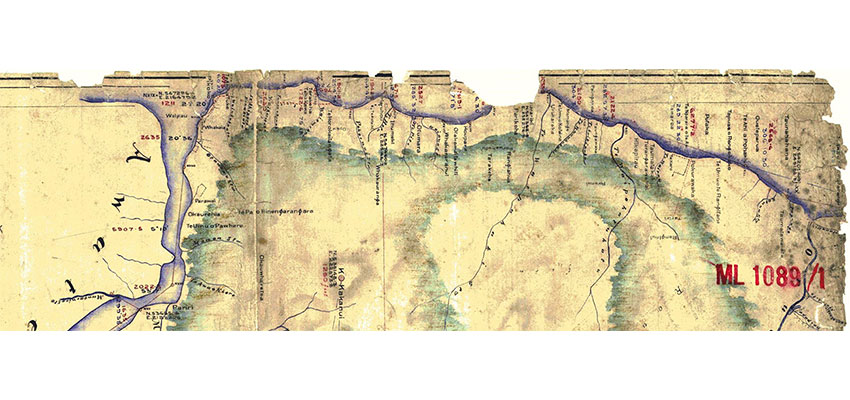
Matiu Prebble spent much of Dec 2002-Jan 2003 exploring colonial surveyor maps, photographs and landscape sketches in an attempt to reconstruct landscape change of the Waikouaiti catchment, 25kms north of Dunedin throughout the 1800s and early 1900s.
Marine Cultural Heritage
Government working paper on the Oceans Policy review - you need to register to view.
Deals with issues over the protection and management of shipwrecks.
Rock Art Project
On limestone walls scattered across the South Island are hundreds of centuries-old drawings. No one is sure what they are or who created them, but as the search for new sites continues, a Ngai Tahu man is fighting to protect them. Kim Knight reports.
In the valley of the moa and the cave of the eagle, the walls don't talk - they murmur. There were people here once. They wrote their days in weka oil and charred wood.
Historic Heritage and the RMA - A response to Owen McShane
Opinion: Garry Law
The attention historic heritage is getting in the proposed amendment to the Resource Management Act is long overdue. Historic heritage has been very well handled by some of the regional and territorial councils in New Zealand. They have identified what is important to their communities and why, scheduled the sites and buildings in their plans and made appropriate policies and rules to ensure heritage is not lost unthinkingly and to protect the best of it. Other Councils have been lax on historic heritage citing the Historic Places Trust as having that responsibility. But the Trust can never adequately reflect local interests, nor has it the RMA planning powers, or the resources to direct to the historic heritage of local significance. Its processes are not subject to local democratic input in the way RMA considerations are.
There had been a proposal to bring all the historic heritage issues within the RMA but that was resisted by many. Rather the upgrading of historic heritage to being a “Matter of National Importance” in the RMA is the compromise, first proposed three years ago and now coming to fruition. Where Councils have tackled historic heritage within the RMA it has not been hugely controversial. The New Zealand Archaeological Associaiton would welcome the standard of the best being achieved by far more Councils. The RMA processes will allow the involvement of the communities in how they go about it. The upgrading of historic heritage to being a matter of national importance will mean it is far more likely to happen.
The Bill proposes a wide definition of historic heritage, and perhaps surprisingly does not vary another matter of national importance, the relationship of Maori to (amongst others) sites and waahi tapu. Without a variation there is now some overlap.
Owen McShane in his opinion piece cites this latter provision as if it were new and alarming. It has been in the Act for 12 years. He also talks of the ability to object to a proposal on historic heritage grounds as if it were new. The existing RMA provision requiring the recognition and protection of the heritage values of sites, buildings, places or areas has always allowed this. Nor is the change going to create heritage parks over private land. Any district plan provisions under this amendment could only have effect for historic features, not an area of broader value.
Designation, a term used by Mr McShane is an RMA process restricted to public works. It does not apply to protecting heritage sites. Heritage Orders do. They are unchanged by this Bill and, to date, have hardly ever been used. I would not foresee them coming any more attractive to public or private bodies than they are now.
This provision is not some wild new step in changing property rights. The most likely effect is the evening out of historic heritage practice by local and regional councils.
Garry Law is the President of the New Zealand Archaeological Association.
Marian Hobbs: Changes protect links with past
MARIAN HOBBS is the Minister for the Environment. She is responding to Owen McShane, who said the planned resource management changes undermined individual property rights
The bill also implements the key recommendations of the Heritage Review carried out by the Parliamentary Commissioner for the Environment in 1997, which found that existing opportunities for government intervention (through the act) have failed to protect historic heritage.
The definition of historic heritage is needed to clarify for local authorities what they must consider. Some concern was expressed in public submissions on the original bill that the definition was too broad. The redrafted definition is appropriate, however, because:
* It will provide guidance to councils on the range of qualities associated with historic heritage and the types of heritage they must recognise and provide for.
* It must be demonstrated that a natural or physical resource will contribute to an understanding of our history and cultures to be historic heritage.
The bill will improve significantly the system for protecting historic heritage through the act.
Saturday, March 29, 2003
Conservation Board Vacancies
The Minister of Conservation is calling for nominations for membership of conservation boards.
Friday, March 28, 2003
Ngati Awa Deed of Settlement
Seven areas of special significance to Ngati Awa will be returned to the iwi. These are:
Kaputerangi Historic Reserve
Te Paripari Pa Historic Reserve
Otitapu Pa (within the Mangaone Scenic Reserve)
Former Matahina A4 Block
Te Toangapoto (within the Western Whakatane Recreation Reserve)
Te Ihukatia (part of the Port Ohope Recreation Reserve), and
Whakapaukorero (within the Matata Scenic Reserve).
These sites total approximately 64 hectares. Kaputerangi Historic Reserve, Te Paripari Pa Historic Reserve, Te Toangapoto, Te Ihukatia, and Whakapaukorero will be re-reserved under the Reserves Act, which means that public access will be maintained. Otitapu Pa will be subject to a protected private land agreement to protect conservation values.
Thursday, March 27, 2003
Nightmare looms in managing resources
Opinion: OWEN MCSHANE
The Government's Resource Management Amendment Bill (No 2) contains radical and unexpected changes that will drastically undermine the property rights of every landowner.
The heritage parks will deliver rural slums because investment in time, effort and money depends on secure property rights.
We knew the amended act would raise the status of "heritage" to a matter of "national importance". We did not expect every property would be exposed to a heritage designation, or a heritage-based objection to development.
The threat arises from the new definition of "historic heritage" which greatly expands its scope to mean "those natural and physical resources that contribute to an understanding and appreciation of New Zealand's history and cultures, deriving from any of the following qualities" - archaeological, architectural, cultural, historic, scientific, spiritual and technological.
These include historic sites, structures, places and areas; cultural landscapes; archaeological sites; sites of significance to Maori, including waahi tapu and ancestral landscapes; and surroundings associated with the natural and physical resources.
Wednesday, March 26, 2003
Waihi Pumphouse
Diggings Undermine Waihi Landmark. HPT action on the issue.
Collapsing mine shafts and tunnels that have forced homeowners to abandon parts of Waihi are also threatening one of the region's most celebrated heritage structures, the Martha Mine pumphouse.
Thursday, March 20, 2003
RMA change to proceed
The bill aimed to ... enhance provisions relating to historic heritage...
Wednesday, March 19, 2003
Archaeology PhD at ANU
PhD opportunities at the Centre for Archaeological Research (CAR), The Australian National University (ANU).
Potential PhD students should see the updated PhD recruitment page on the CAR web. The page contains information on studying archaeology at the ANU, the facilities available and scholarship opportunities. The page also lists a wide range of potential thesis topics and supervisors.
Tuesday, March 18, 2003
Mangere Farewells Controversial Icon
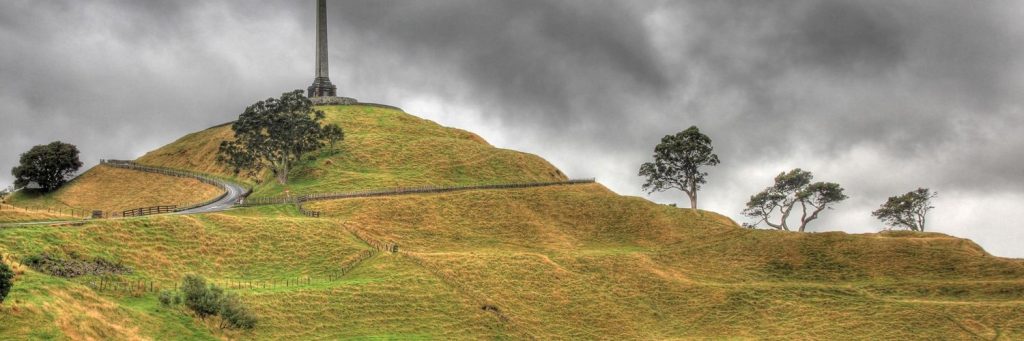
Manukau Water has let a contract to demolish the reservoir on Mt Mangere as it is redundant to water supply requirements in the area and has been out of service for a number of years. The proposal has the approval of the local iwi, MCC, the Department of Conservation, and the Historic Places Trust.
Stomach ulcers draw a map of human migration - Maori sampled
The germ that causes stomach ulcers has been a constant travelling companion throughout tens of thousands of years of human migration.
From the arrival of the first farmers in Europe to the more recent slave trade out of Africa, the tiny spiral bacterium Helicobacter pylori has been hitching a ride inside the travellers' guts, new research shows.
Now the bug could help reveal details about these ancient movements of people.
Maoris have a version that arose in East Asia, and the lack of diversity in their bacteria shows that only small numbers of people were able to island-hop all the way to New Zealand from Polynesia about a thousand years ago, the study concludes.
Monday, March 17, 2003
Booking (click on community courses/culture and civilisation)
Pacific Origins: From Asia to Aotearoa
The University of Auckland, Auckland War Memorial Museum and the Auckland
Museum Institute are combining expertise and presenting a
four-lecture series.
The lectures will be presented by distinguished University and Museum
staff. Bookings essential. You may choose to attend individual
lectures or register for the series.
individual codes. All Lectures will be held in the APEC Room,
Auckland War Memorial Museum. Entry via the East Door.
Wednesday 7th May
"From Asia To Aotearoa" Dr Nigel Prickett
Wednesday 14th May
"The First Settlers" Louise Furey
Wednesday 21st May
"The Archaeology of Late Maori Settlement" Dr Geoff Irwin
Wednesday 28th May
"Polynesian Origins: The Kiore Story" Dr Lisa Matisoo-Smith
Check out the article on the destruction of Afghanistans cultural heritage in the latest Listener. The international trade in antiquities is driving the illicit looting of its archaeological sites. Afghanistan's Minister of Culture calls on the rest of the world to help halt this trade.
Radiocarbon Dating Conference to be held in Wellington
18th International Radiocarbon Conference, which will be held in Wellington, New Zealand, from 1st - 5th of September 2003.
Saturday, March 15, 2003
Waihi's tilted icon may be relocated
A historic icon in the Bay of Plenty mining town of Waihi is under threat of collapse.
The imposing 100-year-old Cornish pumphouse on the eastern side of Waihi sits atop an old goldmining shaft 400m deep - enough to accommodate the Auckland Sky Tower.
But the 16m-high concrete pumphouse, estimated to weigh 1550 tonnes, has taken on a lean as the ground beneath it subsides, and its preservation has been given urgent status.
Friday, March 14, 2003
Rangitoto shipwrecks
ARC page about maritime heritage. The Rangitoto hulks are now a regionally significant heritage site and are protected by the Auckland Regional Council and Department of Conservation.
History of the Maori pa site on Mangere Mountain.
- Te Pane O Mataoho. Great new learnz site on Mangere Mountain. Check out the great Chris Gaskin reconstructions on the linked pages.
Thursday, March 13, 2003
World Heritage Day speech still rumbling
Race Relations Commissioner Joris de Bres has automatic immunity against a complaint to the Human Rights Tribunal against his own "Taleban" speech, according to Human Rights Commission chief commissioner Rosslyn Noonan.
Oldest human footprints found
The oldest human footprints have been found in volcanic ash in Italy.
Saturday, March 08, 2003
Skinner Fund
Annual award - closes 15 March
"...to promote the study of the history, art, culture, physical and social anthropology of the Maori and other Polynesian peoples, particularly through the recording, survey, excavation and scientific study of prehistoric and historic sites in New Zealand and the islands of the South-west Pacific"
Monday, March 03, 2003
Scientists taking new look at Heyerdahl's theories
While Thor Heyerdahl's theories on ancient seafarers spreading civilization were initially ridiculed by scientists, a younger generation is studying his ideas from five decades ago as the basis for new theories on early cultural exchanges.
Saturday, March 01, 2003
K.R. Howe: The Quest For Origins: Who First Discovered New Zealand and the Pacific Islands?
Reviewed by HUGH LARACY
This is not just a good book, it is an important one. Indeed, there has been an explicit need for it since Sunday, June 14, 1722. On the afternoon of that day the Dutch explorer Jacob Roggeveen chanced upon Samoa, and was surprised to find it inhabited by people similar to those he had already met at Easter Island. (Namely, Polynesians, although that term did not come into usage until more than a century later.)
Magazine site
In the latest Historic Places Magazine Autumn 2003:
A city's past buried beneath Auckland sites
Quail Island archaeological dig
Coastline treasures under siege (Archaeological sites)
Gold in the hills of Papamoa (New reserve with spectacular pa)
Isolation no longer protects archaeological heritage
Artistic feast graces southern rocks (Maori rock art)
|
Become
a Member of the N.Z. Archaeological Association
|
Members
get our quarterly magazine, Archaeology in New Zealand and discounts on publications
and events. |
|

|
This
message is intended to be compliant with New Zealand Law: The Unsolicited
Electronic Messages Act 2007. Please communicate with the webmaster on any
issues that may arise in this regard.
|
|
Opinions
in items linked in this column are not those of the Association.
An
archive of news posts can be accessed at http://www.nzarchaeology.org/blog/archive/
|