|
Sent
free to subscribers to nzaawebsubscribers at yahoogroups.com
Want to be an archaeologist? -
our page
on Careers
in Archaeology will help.
More
Touring
New Zealand? - look at this page - Archaeological
Sites for the Cultural Tourist. More
Books you can buy on
line: Archaeological
Books
Send
an archaeological heritage e-card
to someone. More
|
Thursday, November 20, 2003
Historic Places Trust bans further work on subdivision
The New Zealand Historic Places Trust has banned further work on a Matata subdivision.
Although the sections have been sold for housing and consents issued, the site has been the subject of controversy since it was sold by the Ngati Hinerangi Trust as an asset base for the tribe.
Tuesday, November 18, 2003
Inaugural New Zealand science honours event
Among the other medals presented at the event is the New Zealand Association of Scientists' Marsden Medal, awarded to recognise scientists who have made an outstanding contribution to the cause or profession of science in New Zealand. This year the prize goes to Emeritus Professor Roger Green of the Anthropology Department at The University of Auckland. During his long and distinguished career in Pacific archaeology and cultural history, Professor Green has had a profound influence in determining the course of New Zealand archaeology. His contributions to research in Polynesian prehistory form a significant part of our knowledge of the peoples of the Pacific.
New Zealand News - World - Voyager into Pacific's prehistory
In pride of place in the Titirangi home of archaeologist Roger Green is a painting presented to him by Samoan artist Fatu Feu'u.
At the top is a landscape seen from Green's window, stretching through the lush bush of the Waitakeres towards the Manukau Heads. In the centre, the yellow and white water of the sunlit harbour appears to drop in a blinding waterfall of light to the bottom of the painting.
Bottom-right is a stylised human face with a long nose holding what could be a flower. Its style is roughly 3500 years old - that of the "long-nosed gods" portrayed on a kind of pottery called Lapita, whose classic exemplar was given to Green more than 30 years ago by an old man in the Santa Cruz Islands in the eastern Solomons.
Thursday, November 13, 2003
Cultural heritage a driver in foreign coastal investment review
"The purpose of the review is two fold.
First, to ensure that the overseas investment regime focuses on those assets of critical interest, such as certain sensitive land areas, natural resources (eg fish) and assets with historical or cultural significance (eg heritage buildings). "
Chinese discovered New Zealand - amateur historian
The Press is not seduced by Christchurch as the "Chinese Capital of New Zealand":
"English visitor to Christchurch Cedric Bell made his career in oil, but the amateur historian now believes he has the 'real oil' on early exploration in the Pacific.
His findings, in the finest traditions of English eccentricity, espouse the Chinese discovered New Zealand well before Maori or Dutchmen"
The 13 new fellows of the Royal Society of New Zealand include Dr Bruce Hayward, Geomarine Research, an expert on tiny marine organisms which tell the story of changing conditions on Earth over millions of years.
Bruce has of course also made a considerable contribution over the years to archaeology.
Otago Museum Dunedin
Congratulations to the Otago Museum for winning the 2003 tourisim award in the Culture and Heritage Tourism and category.
Tuesday, November 11, 2003
Back to the future in Polynesian canoes
Future generations of space travellers may steer their spaceships inspired by the canoes of the ancient Polynesians.
Anthropologist Ben Finney, who has spent a lifetime re-enacting Polynesian voyages, says human expansion into the previously uninhabited Pacific 3000 years ago is the best model we have for the colonisation of other planets.
Based in Hawaii, he now advises American space administrators on how to identify contacts from other civilisations, and runs summer courses at the International Space University in Strasbourg, France.
Eighteen years after he sailed into the Bay of Islands from Rarotonga on the outrigger Hokule'a, he is back to advise the Auckland Museum on a new exhibition - to open in 2006 - on voyaging in the Pacific.
German Firm Hired to Save Easter Island Sculptures
UNESCO has awarded a German firm contract to preserve the world-famous but decaying Moai head sculptures on Easter Island, which are suffering the effects of the weather, tourism and past restoration attempts.
Stefan Maar, founder of Berlin-based Maar Denkmalpflege GmbH said Tuesday his company planned to begin treating the statues with chemicals in early 2005 in a project estimated to cost about 10 million euros.
"Something has to be done," Maar told Reuters. "But with over 1,000 figures, it is a really big undertaking."
Sunday, November 09, 2003
World Archaeological Congress Supports British Govt Report Recommendation on Returning Bones
The World Archaeological Congress (WAC) today supported a report commissioned by the British Government recommending the return of human remains wherever possible and appropriate from both public and private collections.
"Archaeologists worldwide welcome the recommendation of the removal of legislation which has previously prevented the return of mortal remains to their descendents and communities" said Dr Claire Smith, President of WAC, the international association for archaeologists."'The enforced and involuntary donation of an Indigenous person's body to science in this way, going directly against their religious beliefs and practices, is not acceptable. We welcome the Working Group's recommendation that museums should only hold human remains with the consent of the dead person's descendants."
WAC support the views in the report "there is little question that the original taking of these remains was often morally, if not legally, wrong"; that the refusal to return bones is preventing Indigenous people "from fulfilling a solemn obligation the neglect of which causes acute pain"; and that "until this wrong is redressed there will be no closure in respect of past injustices and an arguable enduring violation of fundamental human rights".
"The recent refusal by the Museum of Natural History in Britain to hand over the remains of 450 Indigenous Australian to tribal elders is out of step with the views of archaeologists in Australia and out of step with international trends on this issue. Let me be quite clear on this. It is only a matter of time. These ancestral remains will be returned to the care of Indigenous Australians." said Dr Smith.
The Chairman of the Working Group on Human Remains held consultations in Britain and Australia, meeting with the then Minister for Immigration, Multicultural and Indigenous Affairs, Philip Ruddock, representatives of the Australian Museum and other museums, as well as Aboriginal leaders and representatives. The Aboriginal and Torres Straight Islander Commission (ATSIC) has welcomed many of the recommendations of the report which included that an independent panel be established to adjudicate claims for the return of remains, when ownership of those remains cannot be agreed upon. The report states that cultural descendents, elders and leaders, should be entitled to make claims.
Maori heads may return home
The return of shrunken Maori heads - mokomokai - to New Zealand could soon be sped up following a recommendation to the British government.
A committee of experts has called for Britain to change the law to enable museums to hand back body parts collected centuries ago in often barbarous circumstances.
For many people the remains are just a number, but for Maori they hold special importance.
The curator of the Maori collection at Auckland's War Memorial Museum wants the mokomokai brought home.
"Human remains are part of the cycle of ancestors to papatuanuku, the earth mother, and while they are in museums we are interfering with that cycle, says Paul Tapsell.
Saturday, November 08, 2003
Claims of Chinese settlement rejected
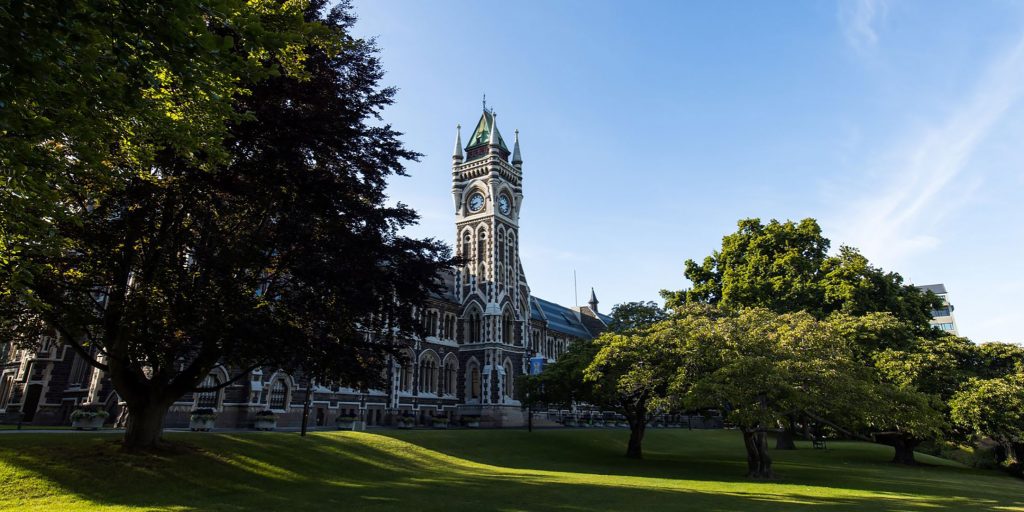
Controversial claims by English amateur archaeologist Cedric Bell that Chinese voyagers settled the South Island long before Maori have been rejected by University of Otago researchers.
Yesterday, Te Runanga O Ngai Tahu deputy chairman Edward Ellison, of Dunedin, said the claims of ancient Chinese settlement of the South Island were "off the wall", and he knew of no supporting evidence.
Dr Ian Smith, a University of Otago senior lecturer in anthropology, said the claims were absolute rubbish.
They were not factually based and involved a mass of conjecture, Dr Smith said.
About 150 years of archaeology and research in New Zealand, and his own archaeology during the past 30 years had shown no evidence that Chinese had settled in the south before about the 1860s, he said.
Wednesday, November 05, 2003
Heritage NZ Magazine Online Features
Rich History Hidden in Gold Mining Country
Like all pioneering history, the story of New Zealand's Chinese prospectors is a remarkable one of adversity and adaptation.
Chinese Heritage Given a Boost
Modern lifestyles make it hard for us to comprehend the gruelling work under extreme conditions miners had to endure to prospect for gold in Otago. Ten Chinese gold-rush era sites proposed for registration will reflect some of the conditions of that time.
NZ Journal of Archaeology - Latest edition - Vol 23
Jones, Jeal, and Jeal - Mahia Peninsula field archaeology
Leach, Quinn, Morrison and Lyon - Human diet from isotope signatures
Jones - Waiapu Valley filed archaeology
Leach and Purdue - Fern-root beaters
Fyfe - Wooden trumpet from Canterbury
Burtenshaw, Harris Davidson and Leach - Growing kumara at the southern margins
Horrocks, Best and Byrami - Ruakaka gardening tool cache.
See http://www.nzarchaeology.org/nzja.html for orders.
orders
|
Become
a Member of the N.Z. Archaeological Association
|
Members
get our quarterly magazine, Archaeology in New Zealand and discounts on publications
and events. |
|

|
This
message is intended to be compliant with New Zealand Law: The Unsolicited
Electronic Messages Act 2007. Please communicate with the webmaster on any
issues that may arise in this regard.
|
|
Opinions
in items linked in this column are not those of the Association.
An
archive of news posts can be accessed at http://www.nzarchaeology.org/blog/archive/
|