If this news sheet does not appear correctly on your screen a net version can be viewed at  http://www.nzarchaeology.org/netsubnews.htm
  NEW ZEALAND ARCHAEOLOGY e-News
  Bringing the Past Alive

 New Zealand Archaeological Association  www.nzarchaeology.org

Sent free to subscribers to nzaawebsubscribers at yahoogroups.com


Not a subscriber? - join here (It's free):


Want to be an archaeologist? - our page on Careers in Archaeology will help.  More

Touring New Zealand? - look at this page - Archaeological Sites for the Cultural Tourist. More

Books you can buy on line: Archaeological Books

Send an archaeological heritage e-card to someone. More 


Sunday, January 23, 2005

 
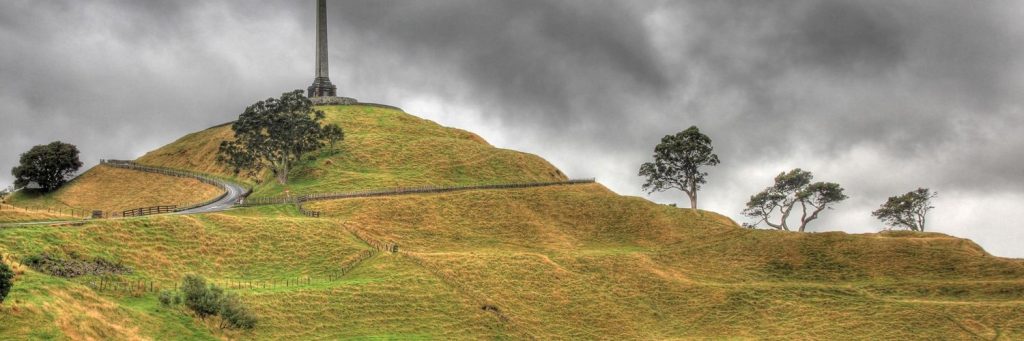
Mt Eden
As Aucklanders file into work on a drowsy midsummer morning, it's bedlam on top of the mountain. Joggers, walkers, tourists - they climb for different reasons: the free 360 degree view, exercise, a sense of freedom, to commune with nature.
But Mt Eden is sinking under the weight of its popularity, according to the volcanic cone's formidable support base
Archaeologist Russell Foster says concerns for the mountain are more than parochial.
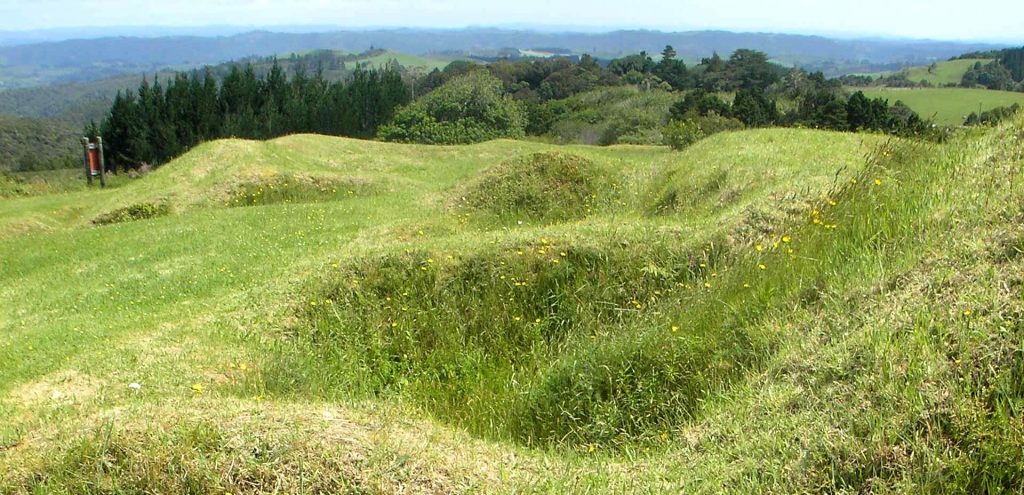
Foster has just finished recording archaeological sites for the conservation plan and says they desperately need protection. Maori terracing, kumara storage pits and the fragile crater have been damaged or destroyed by cattle, walkers and mountainbikers and slopes eroded by grazing. "

 
The Moa : Back From Extinction On Maori Television
Primeval New Zealand was a pristine wilderness ruled by the biggest bird in the world – the moa. Today, only the great bird’s bones remain. Witness an incredible re-enactment through cutting-edge computer technology to bring these mythical beasts back to life and unravel their mysterious disappearance from Aotearoa on THE MIGHTY MOA, screening on Maori Television on Thursday February 17 at 8.30 PM.
However, the relationship between the birds and the first Maori inhabitants of Aotearoa remains a mystery clouded by assumptions. Archaeologist Beverley McCulloch explains that she has never been able to trace a genuine recorded Maori oral tradition relating to moa, while Ngai Tahu spokesperson Te Maire Tau backs up the non-inclusion of moa in the tribe’s oral histories, despite the fact that one of the most significant areas of moa bone excavation is found on the West Coast of the South Island.


Friday, January 21, 2005

 
Management of wetland archaeological sites in New Zealand
By Warren Gumbley, Dilys Johns, and Garry Law
Science for Conservation 246. 76 p.
PDF download (first half) 203 KB
- the second half is linked from the first -

Wetland archaeological sites are excellent archives. The anaerobic environment preserves organic matter to a much greater extent than drier environments, yielding historical, cultural, and climatological data unavailable elsewhere. This paper identifies 177 sites from the New Zealand Archaeological Association site recording scheme, and discusses the state of these sites and wet archaeological sites in New Zealand in general, including protection mechanisms available to preserve sites from ongoing degradation. Sites are best preserved by retaining high levels of ground water, minimising fertiliser-derived pollutants, and controlling stock numbers. High water levels can be maintained by relatively simple methods which require resource management advocacy for the protection of the whole wetland. Two case studies (Kauri Point and Lake Mangakaware) are presented, offering descriptions of significant wet sites, and discussing issues facing their preservation.

 
News: New Zealand News: Dunnies Provide Valuable Info
Archaeologists are lifting the lid on New Zealand's old dunnies.
They will be sifting through the contents of 150-year-old toilets to get a better understanding of the everyday lives of early settlers.
Around 30 experts have arrived in Wellington to start a five week project collecting and documenting information from historic sites along the inner-city bypass route.
Senior archaeologist Rick McGovern-Wilson says the long drops are a good source of material.

Thursday, January 20, 2005

 
In Precontact Hawaii, the Swift Birth of a Temple System--and a Religious State
Proto-historic Hawaiian temples on the island of Maui may have mushroomed up within just 30 years, not 250 as previously supposed, scientists say. The findings could significantly alter researchers' understanding of the pace of precontact sociopolitical change in the Pacific.
In the new work, Patrick V. Kirch and Warren D. Sharp of the University of California and Berkeley used another kind of radiometric technique involving thorium-230, rather than carbon-14, to date bits of branch coral that were collected from living reefs and left as divine offerings at seven different temples during construction. Dates for these corals, which had been incorporated into walls and platform fill, all fell in a narrow range of 1565 to 1638 A.D., give or take a few years on either end. Moreover, dates on the samples that best reflect the time they were harvested from the sea--those from the coral branch tips--ranged from 1608 to 1638 A.D., an interval of just 30 years. These findings thus point to intensive temple-building during that time.

 
Peaceful end for Maori head row
A dispute over human heads which were acquired by a Scottish adventurer is set to reach a peaceful conclusion - after almost 200 years.
Councillors in Perth are likely to agree on Wednesday to return the ancestral items to the Museum of New Zealand.
The tattooed heads, known as toi moko, are stored in Perth Museum.
But they are sacred to the Maori, who are demanding the return of the preserved remains.
They were sent to Scotland by adventurer David Ramsay, a Perth-born ship's surgeon, who settled in Australia in 1822 and set about collecting curios. "

 
A view of COP 10
The US - which pulled out of the Protocol in 2001, but remains a signatory to the Framework Convention - worked to scupper formal talks on the future of the climate regime. It took the position that, until more is known about the science of climate change and the efficacy of existing policies and measures, it is too soon to discuss post-2012 arrangements. It was supported by some developing countries - most notably China and India, whose rapid industrialisation is matched by fast-growing emissions, and the members of OPEC.
Nonetheless, the Argentine government proposed two 'Seminars of Governmental Experts' to meet in 2005, and report back to the next COP -a move initially opposed by the US and developing countries. The EU remains the most enthusiastic supporter of the Protocol and, under pressure from its industry, which fears competitive disadvantages if the bloc continues to move forward alone, is particularly keen to encourage post-2012 discussions.
After some wrangling, a compromise agreement was reached at the 11th hour to hold a seminar in May. However, its terms of reference are severely constrained.
The seminar is to "promote an informal exchange" of information on "actions relating to mitigation and adaptation", rather than provide guidance as such to the UNFCCC process. Crucially, it is to be conducted "without prejudices to any future negotiations, commitments, process, framework or mandate under the Convention and the Kyoto Protocol."
Green groups, unsurprisingly, slammed the deal, with Greenpeace accusing the US and Saudi Arabia of "deliberate tactics of obstruction and delay", which led to "a deal that barely keeps the process moving".
Indeed, those hoping for some continuity -a second commitment period, taking a form similar to the first phase of the Protocol- are likely to be disappointed. In one of many side events at the conference discussing the post-2012 landscape, a panel of eight climate change policy specialists and representatives of 'progressive' business were asked if they believed there was any possibility of a second commitment period that resembles the first, either with or without US participation. None did.


Wednesday, January 19, 2005

 
Speak up if you want it preserved
Got the authority of a Pope, an elephant's hide, the patience of Job, Solomon's wisdom, a St Bernard's stamina, and a trick cyclist's sense of balance? Great, then you are needed, after local body elections in which heritage was a significant concern to a wide range of successful mayoral, council, and community board candidates.
The pressure is on to resource heritage appropriately, to sharpen approaches, and to hear the community. Time, too, to address some of the basic questions often asked.
Such as, why are councils involved anyway? By law they are responsible as heritage protection authorities to identify, protect, and monitor 'heritage' - worthy buildings, objects, places, archaeology, geology, ecology, trees, landforms, landscapes, Maori heritage sites, views, and whatever other aspects of the environment we'd like to leave intact for our descendants to appreciate. "

 
Shackleton hut to be resurrected
Work has begun to restore a hut used by the British explorer Sir Ernest Shackleton during his attempt to reach the South Pole nearly a century ago.
The Nimrod hut at Cape Royds is one of the world's most at-risk monuments.
Shackleton's Nimrod expedition left the UK in 1907, and ended two years later after a perilous journey over the ice.
It came within 150km of the South Pole - the furthest south any group had been at the time - before turning back because of harsh weather.
Shackleton's party wintered in the Nimrod hut, which also provided shelter for ponies and a garage for the continent's first car.
Money has been pledged by individuals, by companies, and by the New Zealand government - though the UK government turned down an application for money from its National Heritage Memorial Fund.
After Nimrod is brought back to health, the team plans to move on to three other huts in the region - two used by Robert Falcon Scott during his Discovery and Terra Nova expeditions, and a fourth built by the Norwegian explorer Carsten Borchgrevink who demonstrated the feasibility of wintering in the Antarctic after landing in 1899.

Tuesday, January 18, 2005

 
World cultural heritage sites
Want to nominate your favourite place - want to suport the nomination of cultural sites?.Only one site can finaly be nominated to UNESCO.
There is a tenetative list of of potential sites to nominate that DOC has proposed. Now is the time to be supporting sites on the list or proposing different ones. The NZAA Council will be making a submission. Thye have to be made by March 31st. To find more and see if you want to help click the link.

Monday, January 17, 2005

 
Mangere Mountain Positions
Education Coordinator
An Education Coordinator position is available at the Mangere Mountain
Education Centre. The role will involve coordinating a range of educational
activities for all ages, as well as managing projects, developing education
resources and general administration of the Centre. Familiarity with
bicultural and environmental education is a must, as are good organisational
skills.

Applications close 11th February. For a job description and application
form, please contact Wayne Knox on:
Ph: 09 634 7305 Fax 09 634 7309
Email: mangeremountain@xtra.co.nz
Postal: PO Box 59099, Mangere Bridge, Manukau
LEOTC Teaching Position

Seeking teacher for 'Learning Experiences Outside the Classroom' (LEOTC)
teaching position. Role will involve guiding walks around Mangere Mountain
and delivering bicultural programmes to Y1-13 students. Key links to social
studies and science curricula. Familiarity with Matauranga Maori is
essential. Ability to speak Maori is a plus, as is an enjoyment of the
outdoors.

Applications close 11th February.
Teaching Position Mangere Mountain Education Centre download
Education Coordinator Mangere Mountain Education Centre download

Wednesday, January 12, 2005

 
DOC: Suggest New Zealand World Heritage sites - Our World Heritage discussion document and submissions
New Zealand is compiling a list of sites that could be nominated for World Heritage status.
'Our World Heritage' is a discussion document that explains the process and presents six potential sites that illustrate the values needed for a World Heritage nomination."
Illustrative sites for the New Zealand tentative list
Kermadec Islands and Marine Reserve
Kahurangi National Park and Farewell Spit
Papamoa Pa Complex
Oamaru Port and Central Business District
Napier Art Deco Historic Precinct
Waitangi Treaty Grounds Historical Precinct

Tuesday, January 11, 2005

 
World Heritage Nominaiton - Tentative list!
Oamaru is one of six tentative candidates on a list the Government is compiling of potential World Heritage Sites, now out for public consultation. Sites on the final list may then be nominated to an international committee for approval.
Kahurangi National Park and Farewell Spit, the Kermadec Islands and surrounding marine reserve, Papamoa Pa complex near Tauranga, Waitangi Treaty grounds, and Napier’s art deco precinct are the others.

Friday, January 07, 2005

 
Environment: Tsunamis may have hit Maori of old
Thousands of people died and coastal communities were devastated after tsunamis struck New Zealand's east coast from Otago to Northland 500 to 600 years ago, an anthropologist says.
Bruce McFadgen, of Wellington, is writing a book on coastal calamities including tsunamis that struck Maori communities in the 15th century. At the time most Maori lived close to the sea.
'About half of settlements were within a kilometre of the coast. That provided the best access to food and good soils for gardening. With almost all the land covered by forest, the sea was the main means of transport.' "

Wednesday, January 05, 2005

 
Huge eagles 'dominated NZ skies'
One of the largest birds of prey ever recorded, an extinct giant eagle, was once New Zealand's chief predator, DNA evidence from fossil bones indicates.
Research published in the journal PLoS Biology says the bird, Haast's eagle, was big enough to rule its environment.
The eagle increased its weight at a rate unprecedented in other birds and animals after reaching New Zealand. "

Sunday, January 02, 2005

 
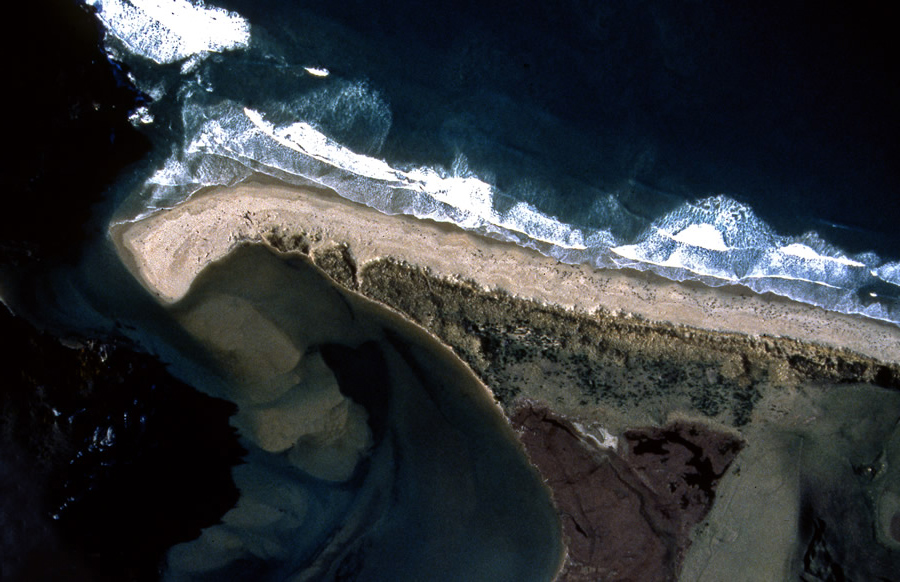
Tsunami Hazzard for the Bay of Plenty and Eastern Coromandel Peninsula
Including paleo tsunami record. Environment Waikato - pdf download.


This page is powered by Blogger, the easy way to update your web site.


Become a Member of the N.Z. Archaeological Association

Members get our quarterly magazine, Archaeology in New Zealand and discounts on publications and events.


This message is intended to be compliant with New Zealand Law: The Unsolicited Electronic Messages Act 2007. Please communicate with the webmaster on any issues that may arise in this regard.

Tell a friend about this newsletter:

Opinions in items linked in this column are not those of the Association.

An archive of news posts can be accessed at http://www.nzarchaeology.org/blog/archive/

 
Good advice for environmental problems


(You will get a confirmation email you need to respond to)

.

.

.

.

.

.

.

.