If this news sheet does not appear correctly on your screen a net version can be viewed at  http://www.nzarchaeology.org/netsubnews.htm
  NEW ZEALAND ARCHAEOLOGY e-News
  Bringing the Past Alive

 New Zealand Archaeological Association  www.nzarchaeology.org

Sent free to subscribers to nzaawebsubscribers at yahoogroups.com


Not a subscriber? - join here (It's free):


Want to be an archaeologist? - our page on Careers in Archaeology will help.  More

Touring New Zealand? - look at this page - Archaeological Sites for the Cultural Tourist. More

Books you can buy on line: Archaeological Books

Send an archaeological heritage e-card to someone. More 


Friday, June 30, 2006

 
Early signs of elephant butchers
Bones and tusks dating back 400,000 years are the earliest signs in Britain of ancient humans butchering elephants for meat, say archaeologists.
Remains of a single adult elephant surrounded by stone tools were found in northwest Kent during work on the Channel Tunnel Rail Link. "

Wednesday, June 28, 2006

 
Sydney Historical Archaeology Practitioners Workshop 2006
pdf download
Date: Friday, 20th October 2006
Venue: Newtown Neighbourhood Centre
We are currently developing a draft programme based upon topics and issues
raised by those in attendance during the feedback session at the last SHAP
Workshop, namely:
• Sydney Basin landscape/pollen/environment (e.g. Botanic Gardens
staff, geomorphologists, environmental historians, landscape
architects, historic gardens people, prehistorians);
• Possible pre-history/contact/cross-over;
• Heritage Office: guidelines, code of practice etc;
• ‘Scientific’ Archaeology – What is it? Stones, Bones, Pollen etc;
• Information dissemination; and
• Practical: OH&S, rates of pay etc.

 
Archaeological Science Under a Microscope

A Symposium in Honour of Tom Loy
19 August 2006, 8:30am-5:30pm
Riverview Room, Emmanuel College, The University of Queensland, St Lucia.
The Symposium will bring together Tom’s colleagues, students and friends to present the latest research on microscopic use-wear and residue analysis, stone-tool function, archaeological microfossils, and ancient DNA, as well as reflect on his contributions to these fields.

Friday, June 23, 2006

 
Study reveals 'oldest jewellery'
The earliest known pieces of jewellery made by modern humans have been identified by scientists.
The three shell beads are between 90,000 and 100,000 years old, according to an international research team.
Two of the ancient beads come from Skhul Cave on the slopes of Mount Carmel in Israel. The other comes from the site of Oued Djebbana in Algeria. "

Monday, June 19, 2006

 
Google Earth has some new photography for New Zealand - for those of you that have GE installed here are some sites that now show up.
Onawe.kmz
Otatara.kmz
Maungarei%20-%20Mt%20Wellington.kmz
Mauao.kmz
Waitangi.kmz
You can get GE here

 
Murky history of the sunken Endeavour
Marine archaeologists are discovering the hidden story of how Captain Cook's ship came to be at the bottom of an American harbour.
Divers found a cannon, an anchor and a fragment of an 18th-century British teapot, as well as a ship's keel embedded in the sea floor. As Abbass told CNN, with six of the 13 wreck sites now identified, "there is a 47 per cent chance that we have our hands on the Endeavour.

Friday, June 16, 2006

 
Waka canoes - Te Ara Encyclopedia of New Zealand
New Te Ara feature by Hoturoa Barclay-Kerr
New Zealand's abundance of wide-girthed trees such as totara meant that Maori could build much more diverse waka (canoes) than in their Polynesian homeland."

 
Archaeological Trowels and Tools : Get a Trowel : WHS Trowels
The archaeologist's WHS trowel
The new and improved WHS archaeologists trowel has finally arrived! The world's greatest pointing trowel is still solid roll-forged, from a single piece of quality Sheffield steel but now it has been rebuilt just for archaeology:
Thicker, stronger blade Higher lift for extra knuckle clearance Flattened tang to stop handle rotation "

Thursday, June 15, 2006

 
Landmarks returned to Ngati Whatua
The Ngati Whatua o Orakei hapu has signed an agreement in principle with the Crown, which will return many significant Auckland landmarks to Maori ownership.
The Crown has acknowledged it breached the Treaty of Waitangi when dealing with Ngati Whatua, saying it failed to protect the hapu's interests.
Soon after the signing of the Treaty of Waitangi, Ngati Whatua handed over much of central Auckland to the crown but quickly found they lost any say in the way it was used. The fight to get it back started 29 years ago when Ngati Whatua occupied Bastion Point.
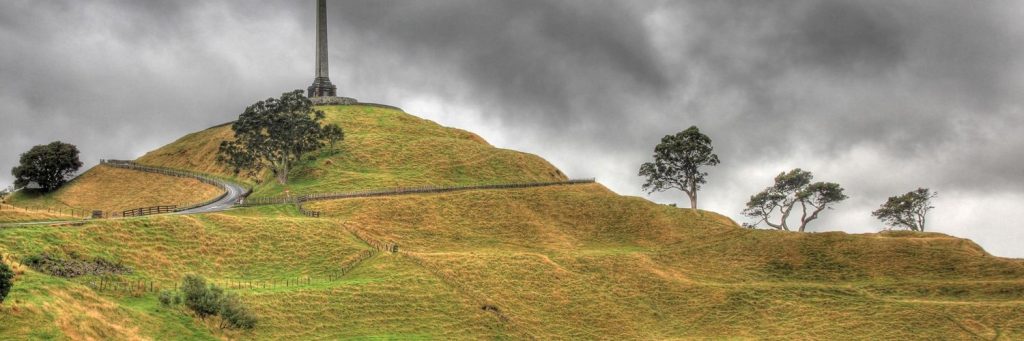
In the agreement the hapu will receive $10 million and the return of iconic locations Mt Eden, One Tree Hill, Mt Roskill and the Purewa Creek."

 
Heritage Trails: Helping communitites develop walks
Their links page has some great NZ heritage walks.

 
What Lies Beneath TV Series (2006)
- On line source to purchase this.
New Zealand 2006, 176 minutes
Featuring: Simon Dallow
An eight-part series about New Zealand's archaeological heritage, presenting a series of intriguing site studies, with Simon Dallow asking the questions of a series of eminent historicans. Episodes cover prehistoric settlements, natural disasters and later historical mysteries.
Episodes: In Search of the Good Keen Whalers, Mysteries of the Crypt, Searching for the First Coasters, Secrets of the Gunfighter Pa, Secrets of the Swamp, Signs of Tsunami, The Missing Miners, Under Wellington "

Thursday, June 08, 2006

 
Historic Ranger, Visitor and Historic Assets, Bay of Islands Area
A2 (CA1/IA)
Northland Conservancy Vacancy 61/325
Famous for its breathtaking scenery and wonderful recreational opportunities, the best kept secret in the Bay of Islands is the wealth of pre-European and early-contact mainland and island sites, buildings, the Cape Brett lighthouse and many other structures that provide resounding evidence of its colourful history. This position, based in Kerikeri, will offer the applicant the opportunity to manage many iconic historic places in the Bay of Islands area.
The Bay of Islands Area Office is seeking a highly motivated and enthusiastic heritage professional who possesses the appropriate tertiary qualification, a good understanding of historic management principles and a sound working knowledge of the relevant legislation. They will provide the technical components and their application to the field delivery of conservation outputs in Historic Heritage.
The successful applicant will have excellent relationship skills, with the ability to work with a wide range of people including volunteers, iwi, contractors and other agencies.
The key elements to the position are to have;
• Masters Degree in archaeology or equivalent experience
• Understanding of best practise principles for conservation of historic structures and places
• A sound understanding of tikanga maori as it relates to heritage
• General knowledge of Northland’s history
• Excellent communication skills
• Proven skills as a field archaeologist
• To be a team player
For an application pack, contact kupperton@doc.govt.nz, or the Bay of Islands Area Office, telephone (09) 407 8474 quoting Vacancy 61/325.
Applications close in the Bay of Islands Area Office at Noon on Friday, 7 July, 2006.
Bay of Islands Area Office
PO Box 128
Kerikeri
Phone: (09) 407 8474 Fax: (09) 407 7938
www.doc.govt.nz

Wednesday, June 07, 2006

 
Tooth gives up oldest human DNA
Scientists have recovered DNA from a Neanderthal that lived 100,000 years ago - the oldest human-type DNA so far.
It was extracted from the tooth of a Neanderthal child found in the Scladina cave in the Meuse Basin, Belgium"

 
Fifty years of the New Zealand Archaeological Association Peter Gathercole
Review article (is pay for)
Part retrospect, part review, this article lets Peter
Gathercole take the long view and reflect on recent
trends in New Zealand archaeology.
Change through Time: 50 Years of New Zealand
Archaeology
Digging into History:
50 years of the New Zealand Archaeological
Association. Archaeology in New Zealand 47 (4)
(In his first editorial inMarch 1927, O.G.S. Crawford
(1927: 3-4) stated that Antiquity’s policy would
not be narrow. His first number was true to his
word. Alongside distinguished archaeologists, authors
included New Zealand-born social anthropologist
Raymond Firth, who was shortly to publish his
pioneer study, Primitive Economics of the New Zealand
Maori (1929). Firth’s article, ‘Maori Hill-Forts’, an
ethnological study of the Maori pa, invoked direct
comparison with British hill-forts, at least in part, no
doubt, to introduce non-New Zealand readers to such
structurally comparable sites by means of a familiar
archaeological idiom (Firth 1927).
Since 1927 discussion of the archaeology of New
Zealand has figured occasionally in this journal, the
tempo increasing as it became more systematically
defined and explored after 1945. Today, its examination
has acquired a wider significance.
(The latest Antiquity also has a retrospective view on Australia by John Mulvaney)

Monday, June 05, 2006

 
Queen's Birthday Honours list for 2006 Dr Bruce William Hayward, Auckland. For services to earth science and conservation.

Saturday, June 03, 2006

 
Big dig raises hackles - Whangarei Northern Advocate - Jun 2 2006 5:59PM - localnews: "A Bay of Islands developer is under investigation amid claims he carried out major earthworks within the Queen's Chain and possibly destroyed an archaeological site.
Developer Trevor Love, of Mount Industrial Joint Venture Trust, who is developing a five-hectare block on the Purerua Peninsula, near Kerikeri, says opponents are over-reacting.
The New Zealand Kiwi Foundation says the Northland Regional Council, Far North District Council, the Department of Conservation and the Historic Places Trust are investigating.


The authorities and local iwi visited the site in April when it was found work had been carried out in the DOC-administered Queen's Chain. It is also alleged development had been carried out too near the Opete River. "

Thursday, June 01, 2006

 
New twist in 'hobbit' human story
The hobbit-like human was smart enough to make stone tools despite its small brain, according to research.
Sharpened flints found on the remote Indonesian island where it lived suggest the human 'cousin' inherited tool-making skills from its ancestors.
Some have claimed its brain was too tiny to perform a complex task seen as a hallmark of human culture.
The study in Nature backs the view that the hobbit is a new species rather than a modern human with a brain disease. "

 
One year contract VAMS/historic position Central Otago Area Office
In this weeks government jobs gazette there is a one year temporary position for an A2 historic/VAMS ranger (it has been accidentally been listed under Coastal Otago). DOC writes: ..."This is a great opportunity to work in an area where almost all of our visitor sites are also historic sites. Upcoming projects that the successful candidate will be involved in include the restoration of the St Bathans Hall, stabilisation to the tunnellers camp on the Otago Central Rail Trail, supervision of the archaeological assessment required before track upgrades at the Blue Lake Recreation Reserve (St Bathans) and Bannockburn Sluicings and the development of a maintenance programme for historic assets acquired through tenure review. If that isn't exciting enough this position also provides the opportunity for some intensive work on the VAMS database, beautiful weather, close to ski fields, the Otago block mountains and ...

Anita Middlemiss
Visitor/Historic Assets
Central Otago Area Office
DDI 03 440 2281


This page is powered by Blogger, the easy way to update your web site.


Become a Member of the N.Z. Archaeological Association

Members get our quarterly magazine, Archaeology in New Zealand and discounts on publications and events.


This message is intended to be compliant with New Zealand Law: The Unsolicited Electronic Messages Act 2007. Please communicate with the webmaster on any issues that may arise in this regard.

Tell a friend about this newsletter:

Opinions in items linked in this column are not those of the Association.

An archive of news posts can be accessed at http://www.nzarchaeology.org/blog/archive/

 
Good advice for environmental problems


(You will get a confirmation email you need to respond to)

.

.

.

.

.

.

.

.