|
Sent
free to subscribers to nzaawebsubscribers at yahoogroups.com
RSS link for this
news:
The
New Zealand archaeological Wiki.
archaeopedia.com
Want to be an archaeologist? -
our page on Careers
in Archaeology will help.
More
Touring
New Zealand? - look at this page - Archaeological
Sites for the Cultural Tourist. More
|
Sunday, August 27, 2006
Esme Webb visiting "I fly into Auckland on 29 August at 0500, and fly out again on 7 September afternoon. I'd like to spend time at U of A, Wellington, Christchurch, Otago and anywhere else where there are archaeologists or Quaternary people to talk to. I have some overhead transparencies with me, but no formal powerpoint presentation. I can therefore talk about my research in the semi-arid zone of central Western Australia. I shall be contactable by email until I leave Seattle, where I now am, on the morning of 27 August. e.webb@ecu.edu.au R Esmee Webb School of Natural Sciences Edith Cowan University Joondalup WA 6027
Remote island provides clues on population growth, environmental degradation Halfway between South America and New Zealand, in the remote South Pacific, is Rapa. This horseshoe-shaped, 13.5 square-mile island of volcanic origin, located essentially in the middle of nowhere, is 'a microcosm of the world's situation,' says a University of Oregon archaeologist. Until only recently, little was known about the French Polynesian Island, where the current population is less than 500. Archaeological, linguistic and genetic data suggest that the island, like much of East Polynesia, was inhabited in a final pulse of colonization by seafaring travelers who originated from Island Southeast Asia. New research, led by the University of Oregon's Douglas Kennett, has shed fresh new light on Rapa, especially on what life may have been like for as many as 1,500 to 2,000 people who lived there before the arrival of European explorers. "
Friday, August 18, 2006
HPT job Archaeologist Based in Kerikeri, Bay of Islands The New Zealand Historic Places Trust is New Zealand’s lead agency for heritage protection and advocacy. The Northland Area Archaeologist will provide expert and professional archaeological advice to Trust staff, heritage clients and stakeholders. The Trust is seeking applications from people with skills and experience in statutory archaeological processes and resource management, together with the ability and confidence to work effectively with other archaeologists, local authorities, developers and whanau/hapu/iwi. A post graduate qualification in New Zealand Archaeology is required.
Thursday, August 17, 2006
Missing evolutionary link near to discovery Scientists have come a step closer to understanding one of the key moments in man's evolution when the human brain underwent a dramatic increase in size. Our brain is three times larger than that of our closest living relative - the chimpanzee - and yet how the transformation happened is one of the biggest mysteries of human evolution. A large brain is the physical essence of humanity. It enabled language, consciousness and culture and yet scientists can only speculate as to why it evolved to be so much bigger than the brain of our ape-like ancestors. A comparison of the human genome with that of the chimp - along with several other animals - has now revealed the existence of a key region of man's DNA that appears to play an important role in the growth of the human brain. Many different animals possess the same region of DNA but it is only in humans that it has undergone a rapid and dramatic evolutionary change. The difference between chickens and chimps - which are separated by 310 million years of evolution - is just two mutations out of a total DNA sequence of 118 'letters' of the genetic code. Yet the difference between chimps and humans - separated by 6 million years - is 18 mutations in the same DNA region."
Friday, August 11, 2006
SAA: Archaeology for the public Society for American Archaeology Do you want to visit an archaeology site? Are you curious about what archaeologists do and why? We have information about all this -- and a lot more. These web pages are designed for members of the public who want to know more about archaeology, as well as for archaeologists who want to know more about working with the public."
Wednesday, August 09, 2006
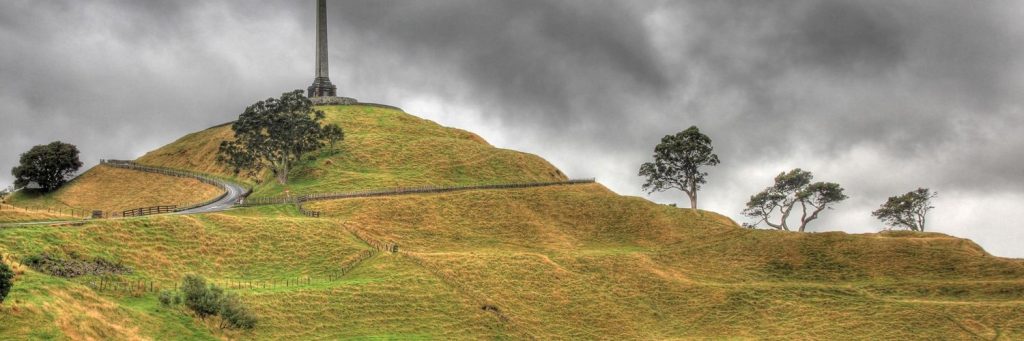
Plans to ban all Mt Eden vehicles All vehicles are to be banned from the summit of Mt Eden (Maungawhau) under a plan to protect one of Auckland's main archaeological, geological and cultural sites - and one of its most popular destinations. The move extends an earlier Auckland City Council proposal to ban tourist buses from the summit. The mountain is 'eroding before our eyes', Mayor Dick Hubbard said at the launch of Project Maungawhau yesterday, and he favours stopping all vehicles from driving to the top of the region's tallest volcanic cone (196m)."
Maungawhau Mt Eden management plan Auckland City is currently reviewing the Maungawhau Mt Eden management plan. The plan was first developed in 1986 and now needs updating to preserve the mountain's special features and to manage the demand from competing user groups. Open for submissions.
HPT Jobs in Tauranga See advertisement(pdf download. One is archaeological.
Monday, August 07, 2006
NZAA Conference 2007 13-17 June 2007 Hanmer Springs. Venue to be advised. The theme for the 53rd annual conference will be: Archaeology in Isolation. Hanmer Springs is located in the centre of the South Island, at the base of the Southern Alps, approximately 90 minutes drive north from Christchurch. Join us to explore heritage amongst the hot pools and high country. See the website for more information as it appears. Papers offers are open - see the website."
Saturday, August 05, 2006
Protected Objects - Ministry for Culture and Heritage Introducing Protected Objects On 1 November 2006, amendments to the Antiquities Act will come into force. Renamed the Protected Objects Act 1975, the amended Act will improve the laws safeguarding New Zealand's unique and significant movable cultural heritage. The information on this page is from our newsletter, the first in a series aimed at updating heritage experts, collectors, dealers and the general public on the reforms and what they will mean in practice. "
Legislation will better safeguard NZ's cultural heritage New Zealand's unique and significant cultural heritage will be better protected under new legislation passed by Parliament today says the Associate Arts, Culture and Heritage Minister Judith Tizard. The Protected Objects Act replaces the 31year-old Antiquities Act and takes effect from 1 November. 'The legislation seeks to preserve the delicate balance between the national interest and private property rights established under the Antiquities Act 1975, says Judith Tizard. 'Under the new law illegally exported New Zealand objects are now more likely to be returned home. New Zealand can now become party to the1970 UNESCO and 1995 UNIDROIT Conventions which deal with the illegal trade in cultural treasures. Signing up to these conventions will increase the chance that recent situations such as the one involving the Motunui Pataki panels (the ?Ortiz? case) can be resolved with the return of the objects, the Minister said. It will also allow New Zealand to be a good international citizen?, by allowing other countries similar redress, should items of cultural significance to other parties to the conventions be imported or attempted to be imported illegally into NZ. "
Plans to ban all Mt Eden vehicles - All vehicles are to be banned from the summit of Mt Eden (Maungawhau) under a plan to protect one of Auckland's main archaeological, geological and cultural sites - and one of its most popular destinations. The move extends an earlier Auckland City Council proposal to ban tourist buses from the summit. The mountain is "eroding before our eyes", Mayor Dick Hubbard said at the launch of Project Maungawhau yesterday, and he favours stopping all vehicles from driving to the top of the region's tallest volcanic cone (196m).
Tuesday, August 01, 2006
Salmond reappointed Chair of Historic Places Trust Dame Anne Salmond has been reappointed Chair of the Historic Places Trust Board and five members have been reappointed the Associate Arts, Culture and Heritage Minister Judith Tizard announced today. Trust Board chair Dame Anne Salmond is a respected scholar specialising in Maori history. Professor in Maori Studies and Social Anthropology at the University of Auckland, she will continue to bring a strong bi-cultural perspective to the board which she has chaired since 2002. "
Appointments to Maori Heritage Council Associate Arts, Culture and Heritage Minister Judith Tizard today announced the appointment of one new member and the reappointment of an existing member to the Maori Heritage Council of the New Zealand Historic Places Trust. The new member, Rima Edwards of Kaitaia, has chaired Te Runanga o Muriwhenua for 18 years, and has been a member of the Tai Tokerau Maori Trust Board since 2001. He was a Kaitaia Borough Councillor for six years and has held numerous offices in Maori and other community organisations. Rima is a cultural and accountancy consultant in the Far North. Waaka Vercoe of Whakatane, who is being reappointed for a further term, is a kaumatua with skills in local government."
|
Become
a Member of the N.Z. Archaeological Association
|
Members
get our quarterly magazine, Archaeology in New Zealand and discounts on publications
and events. |
|

|
This
message is intended to be compliant with New Zealand Law: The Unsolicited
Electronic Messages Act 2007. Please communicate with the webmaster on any
issues that may arise in this regard.
|
|
Opinions
in items linked in this column are not those of the Association.
An
archive of news posts can be accessed at http://www.nzarchaeology.org/blog/archive/
|