|
Sent
free to subscribers to nzaawebsubscribers at yahoogroups.com
Want to be an archaeologist? -
our page
on Careers
in Archaeology will help.
More
Touring
New Zealand? - look at this page - Archaeological
Sites for the Cultural Tourist. More
Books you can buy on
line: Archaeological
Books
Send
an archaeological heritage e-card
to someone. More
|
Friday, September 29, 2006
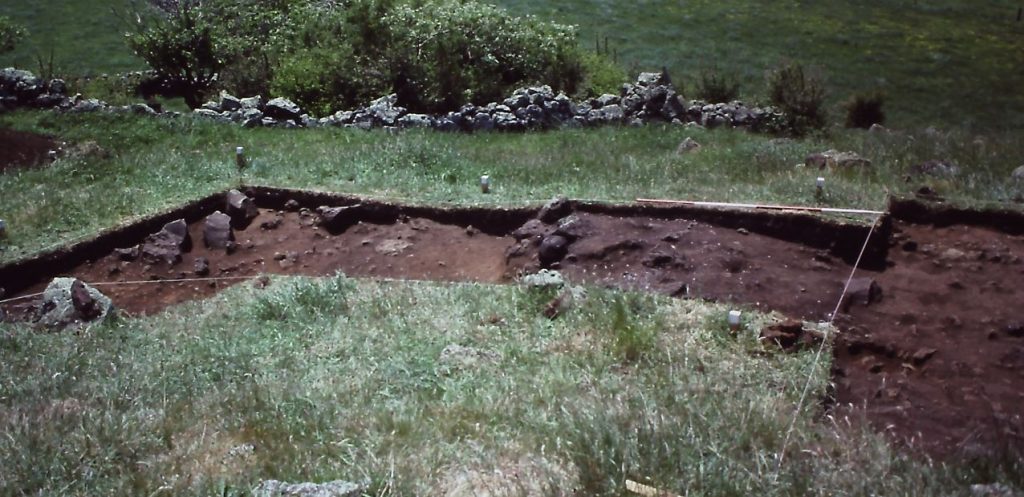
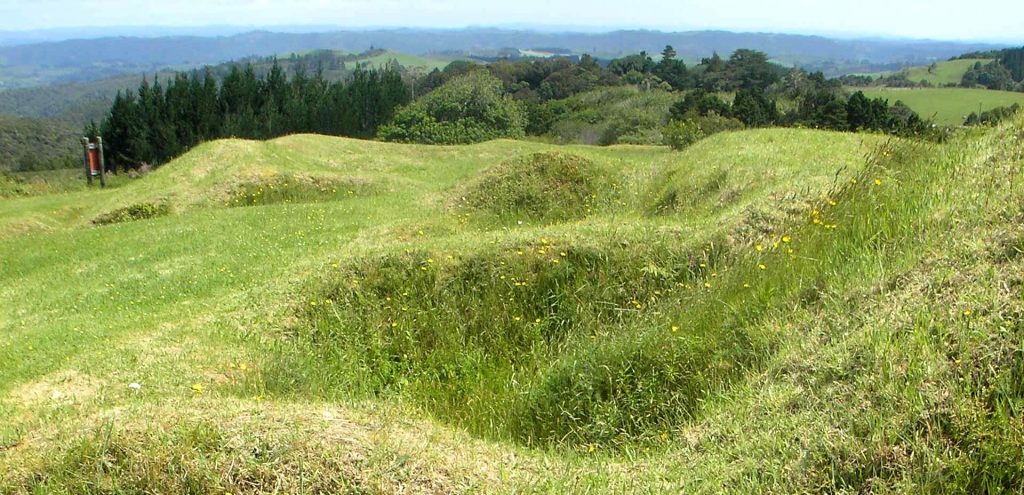
Quarry opponents point to Maori historical sites Opponents of Valley Sand Supplies' plans to expand its Pukerimu sand quarry say it is threatening Maori historical sites. Valley Sands has applied for resource consent to expand its Cambridge Rd quarry, along with greenwaste composting, a cleanfill landfill, demolition materials recycling and a refuse transfer depot for inorganic waste. A group of neighbours have formed the Pukerimu Preservation Society to oppose the move and say the company is not following the consent conditions already in place. Group member Colin Deacon said he was concerned the company could be damaging pre-European soil structures and borrow pits' on its newly acquired land facing Kaipaki Rd. The south side of the Waikato River has many areas of soil modified by Maori. Borrow pits are hollows where pumice and similar material were dug up and spread into the surrounding soil, raising the soil temperature to improve growing conditions. "
New Zealand Archaeology - AINZ and Journal AINZ Vol 49(3) out now: Notes and News Fieldwork Recent Reports How big are pa? - Tony Walton Kumala - Roger Green Lapita on an island in the mangroves - Patrick Nunn and others Matakoe Tramway - Joanna Wylie Reviews
NZ Journal of Archaeology - Latest edition - Vol 27: David Addison and others: Ceramic deposits Tutuila Island. Melinda Allen: Occupation at Tauroa Pt. Kevin Jones and Tony Walton: Otatara/ Hikurangi Pa. Matthew Campbell and Mark Horroks Hamurana Rd site, Rotorua. Dan Witter: Greywacke artefacts from Canterbury. Christophe Sand and others: Convict settlements, New Caledonia."
Journal of the Polynesian Society Now on line with an articles service - from 2006 only as yet - pay for.
Wednesday, September 27, 2006
ARC Summer Job Summer Employment Opportunity The Auckland Regional Council Heritage Team is seeking a student to undertake cultural heritage management support tasks during the 2006 – 2007 summer vacation. The work will primarily involve the maintenance and development of the Council’s historic places database. However it is envisaged that there will be opportunities for a suitable applicant to assist with archaeological survey and other fieldwork.
AUCKLAND job Opus International Consultants Ltd is New Zealand’s largest multi-disciplinary consultancy with offices throughout New Zealand and in Australia, Canada and the United Kingdom. We are looking to strengthen our Auckland team with the appointment of a Heritage Consultant. This position is based in Auckland but will involve travel. This is an exciting opportunity for someone with practical experience and training in archaeology, history, architecture or planning, keen to exercise their skills in the commercial sector.
Thursday, September 21, 2006
'Lucy's baby' found in Ethiopia The 3.3-million-year-old fossilised remains of a human-like child have been unearthed in Ethiopia's Dikika region. The female Australopithecus afarensis bones are from the same species as an adult skeleton found in 1974 which was nicknamed 'Lucy'. Scientists are thrilled with the find, reported in the journal Nature. They believe the near-complete remains offer a remarkable opportunity to study growth and development in an important extinct human ancestor. 'Lucy's baby' found in Ethiopia The juvenile specimen is wonderfully preserved
Skull Revealed The 3.3-million-year-old fossilised remains of a human-like child have been unearthed in Ethiopia's Dikika region. The female Australopithecus afarensis bones are from the same species as an adult skeleton found in 1974 which was nicknamed 'Lucy'. Scientists are thrilled with the find, reported in the journal Nature. They believe the near-complete remains offer a remarkable opportunity to study growth and development in an important extinct human ancestor. "
Friday, September 15, 2006
'Oldest' New World writing found Ancient civilisations in Mexico developed a writing system as early as 2,000 years ago, new evidence suggests. The discovery in the state of Veracruz of a block inscribed with symbolic shapes has astounded anthropologists. "
Thursday, September 14, 2006
Summer Employment Opportunity The Auckland Regional Council Heritage Team is seeking a student to undertake cultural heritage management support tasks during the 2006 – 2007 summer vacation. The work will primarily involve the maintenance and development of the Council’s historic places database. However it is envisaged that there will be opportunities for a suitable applicant to assist with archaeological survey and other fieldwork. Applications are welcomed from students with a background in archaeology or a related cultural heritage discipline who have an interest in cultural heritage management. Some experience with Inmagic or a similar database and/or Geographic Information Systems would be an advantage. However, on-site training will be provided. Previous archaeological survey experience would also be an advantage. A current drivers license is necessary. The work will be for a period of 12 weeks duration between November 2006 and March 2007. Student rates will apply. The position will be based at the ARC offices at 21 Pitt Street, Central Auckland. Applications are to be received by Friday 6th of October 2006, and should include a curriculum vitae. Applications or further inquiries should be addressed to: Sarah Hume Archaeologist Auckland Regional Council Private Bag 92012 Auckland http://www.arc.govt.nz phone: (09) 366 2000 ext 8014 fax: (09) 366 2155 email: sarah.hume@arc.govt.nz
Monday, September 11, 2006
NZAA Digs Listing Crosbies Settlement, Coromandel Ranges (approx 12 km from Thames Dig dates: 21-23 October 2006 (Labour Weekend) or negotiable Info and contacts: A 'find' initially, rather than a 'dig'. Crosbies Settlement was established c.1865 and was farmed until the early 1970s when it became part of the Coromandel Forest Park. The intention is to locate building remnants (& other artefacts)& prepare an SRF. The area has now almost completely reverted to bush, but 1944 air photo coverage clearly shows several buildings and other structures. (The photos have been imported into ArcGIS & georeferenced.) I'd appreciate assistance with the search & there is potential for a more detailed site investigation, depending on what is located. Further info on request. Name : Dave Wilton (Mobile 021 1868401)
Saturday, September 09, 2006
NZAA Conference 2007 - note changed dates Wednesday 6 June to Sunday 10 June 2007. Venue: The Heritage Hotel. Hanmer Springs. The theme for the 53rd annual conference will be: Archaeology in Isolation. Hanmer Springs is located in the centre of the South Island, at the base of the Southern Alps, approximately 90 minutes drive north from Christchurch. Join us to explore heritage amongst the hot pools and high country For information about the conference theme or papers inquiries please contact the papers coordinator: Dr Richard Walter at Richard.walter@stonebow.otago.ac.nz or phone (03) 479 8754.
Friday, September 08, 2006
What is an Archaeological Site? The following archaeological guidelines are the first three of a series being developed. They are available as downloadable pdfs. Buildings recording Archaeological assessments Research strategies
Winters 'wiped out whole population' Britain has been colonised at least eight times over the past 700,000 years and on seven of these occasions the entire human population was wiped out by intensely cold winters. This is one of the main conclusions of a five-year investigation into the prehistoric sites of Britain which has shown that the last colonisation occurred less than 12,000 years ago - making Britain a younger country than Australia, which has been continuously inhabited for at least 50,000 years. 'Britain had to be repopulated over and over again. Completely new people had to come back, sometimes with a gap of 100,000 years between these occupations,' said Professor Chris Stringer, head of human origins at the Natural History Museum in London."
Cultural Heritage and Indigenous Cultural and Intellectual Property Rights A World Archaeological Congress Symposium Venue: Burra, South Australia Dates: 3-5 December 2006 Convenors: Claire Smith and Heather Burke, Department of Archaeology, Flinders University Program Chair: Tim Ormsby< Paxton Square Cottages > This cross-disciplinary international conference will address the history of and contemporary developments in the intersections between cultural heritage and cultural and intellectual property rights in Indigenous customary and academic worlds. Key speakers include Julie Hollowell and George Nicholas, Canada; Maui Solomon, New Zealand; and Sven Ouzman, South Africa. The conference will be held in the heritage town of Burra, South Australia, in the traditional country of the Ngadjuri people. Burra is a significant location for discussion of this topic, since it was the site where the Burra Charter (the Australia ICOMOS charter for places of cultural significance) was developed. The significance of this charter is recognized internationally, and our planned conference also will be addressing issues of international significance.
Thursday, September 07, 2006
RSNZ: Narsden Project Revealing the Histories of M?ori Cloaks Using DNA M?ori cloaks, or k?kahu, are taonga, a treasure as unique to New Zealand as the variety of materials and dyes used to create them. Cloak-making has a long history, and stunning examples exist in museums in New Zealand and around the world. Sadly, a lot of information about many of these k?kahu has been lost, meaning that much about these national icons; their origins and individual histories are unknown. Using a combination of traditional knowledge and DNA technology, Dr Leon Huynen from Massey University has been awarded a Marsden grant to unravel the whakapapa of M?ori cloaks, and uncover lost secrets of M?ori clothing technology. Dr Huynen will work with the support of Te Roopu Raranga Whatu o Aotearoa, the NZ M?ori weavers group.
RSNZ: Marden Project The World of the Moa Moa specialist Dr Richard Holdaway has received a Marsden grant to study North Canterbury moa fossils, using the very latest in biological technologies. The study will throw new light on whether the moa population that existed before human settlement was stable or declining. In the late 1930s, a remarkable deposit of moa bones was found at Pyramid Valley swamp in North Canterbury. Sixty five years later, but only 5 km away, an equally impressive collection was discovered beneath Bell Hill Vineyard. These two swamps trapped birds of all ages, and included at least four species of moa from a period extending back 4000 years.
Until now, the remains have been studied mainly through anatomical examination of bones, but the recent development of new techniques has meant that moa research has been undergoing a major revival. Ancient DNA research has already shown that there were two species of giant moa in New Zealand, and that the females were nearly twice as large as the males."
RSNZ: Marsden 2006 results: "Island networks in Melanesia: The prehistory of Tetepare Island, University of Otago, TD Thomas, University of Otago Head in the clouds: The archaeology of Kosipe. Understanding the dynamics and nature of the colonisation of Near Oceania in the Late Pleistocene, University of Otago, Professor GR Summerhayes, University of Otago"
Tuesday, September 05, 2006
ICOMOS 2006 National Conference challenge and change IN PORTS, THEIR TOWNS AND CITIES 2006 National Conference to be held in the historic port city of Fremantle, Western Australia. Australia’s port towns and cities have developed from the earliest European colonies in this country and are still home to a large proportion of the population. This conference will explore the many challenges and changes in port cities, including the often competing interests of operating modern ports while conserving the social, building, engineering and archaeological records of their history. The conference organising committee has been successful in attracting a number of outstanding keynote speakers. We are very pleased to welcome Dr Brian Shaw from Australia, Jonathan Coad from the UK and Dr Jacek Dominiczak from Poland who will be supported by a diversity of speakers from around Australia and internationally. The conference will be relevant to a broad audience involved in the heritage industry. It will provide an excellent opportunity for delegates to meet and exchange ideas with other ICOMOS members and heritage and other professionals. "
|
Become
a Member of the N.Z. Archaeological Association
|
Members
get our quarterly magazine, Archaeology in New Zealand and discounts on publications
and events. |
|

|
This
message is intended to be compliant with New Zealand Law: The Unsolicited
Electronic Messages Act 2007. Please communicate with the webmaster on any
issues that may arise in this regard.
|
|
Opinions
in items linked in this column are not those of the Association.
An
archive of news posts can be accessed at http://www.nzarchaeology.org/blog/archive/
|