If this news sheet does not appear correctly on your screen a net version can be viewed at  http://www.nzarchaeology.org/netsubnews.htm
  NEW ZEALAND ARCHAEOLOGY e-News
  Bringing the Past Alive

 New Zealand Archaeological Association  www.nzarchaeology.org

Sent free to subscribers to nzaawebsubscribers at yahoogroups.com


Not a subscriber? - join here (It's free):


RSS link for this news:


Explorator
Science Daily - Archaeology

About - archaeology

Stone Pages Archaeo News

Google News - archaeology

A Blog About History


Digital Site Record Scheme
www.archsite.org.nz


The New Zealand archaeological Wiki.
archaeopedia.com


Want to be an archaeologist? - our page on Careers in Archaeology will help.  More

Touring New Zealand? - look at this page - Archaeological Sites for the Cultural Tourist. More


Friday, December 29, 2006

 
New Zealand Archaeology
Archaeology in New Zealand
Vol 49(4) out now:
Notes and News
Fieldwork
Recent Reports
Chinese goldfield settlement in Central Otago, Chris Jacomb and others
Kaitiakitanga of cultural sites, Roy Piahana
Haast v. McKay - first ethical controversy, John Yaldwin and others
Reviews
Letters"

Wednesday, December 27, 2006

 
Timor cave may reveal how humans reached Australia
An Australian archaeologist has discovered the oldest evidence of occupation by modern humans on the islands that were the stepping stones from South-East Asia to Australia.
A cave site in East Timor where people lived more than 42,000 years ago, eating turtles, tuna and giant rats, was unearthed by Sue O'Connor, head of archaeology and natural history at the Australian National University.
Dr O'Connor also found ancient stone tools and shells used for decoration in the limestone shelter, known as Jerimalai, on the eastern tip of the island.

She said her discovery could help solve the mystery of the route ancient seafarers took to get here from South-East Asia.

It strengthens the view that they made a southern passage, via Timor, rather than travelling northwards via Borneo and Sulawesi, then down through Papua New Guinea. “The antiquity of the Jerimalai shelter makes this site significant at a world level,” said Dr

O'Connor, who presented the findings at the annual conference of the Australian Archaeological Association this month."

Thursday, December 21, 2006

 
The World Archaeological Congress
New website:
The World Archaeological Congress is a non-governmental, not-for-profit organization and is the only archaeological organisation with elected global representation. Its programs are run by members who give their time in a voluntary capacity. Membership is open to archaeologists, heritage managers, students and members of the public. "

Wednesday, December 20, 2006

 
Informaiton Request Kopu Bridge
Dave Wilton: email d.r.wilton@massey.ac.nz or 021 1868401:
The Coromandel Heritage Trust has been asked to produce a short documentary on the Kopu Bridge before it's closed. We intend to include historical background, photos, engineering drawings, eyewitness observations etc. There's a pretty negligible budget but we've obtained the services of a media arts student from Waikato Uni & the project will go ahead during 2007.
If you can provide any information, I'd appreciate it if you could let me know. Particular needs are historical photos, and contact details of eyewitnesses, or people with anecdotes. We're also after background material on the Waihou River & valley & the drainage & settlement of the Hauraki Plains, as well as directly relating to the bridge.

Tuesday, December 19, 2006

 
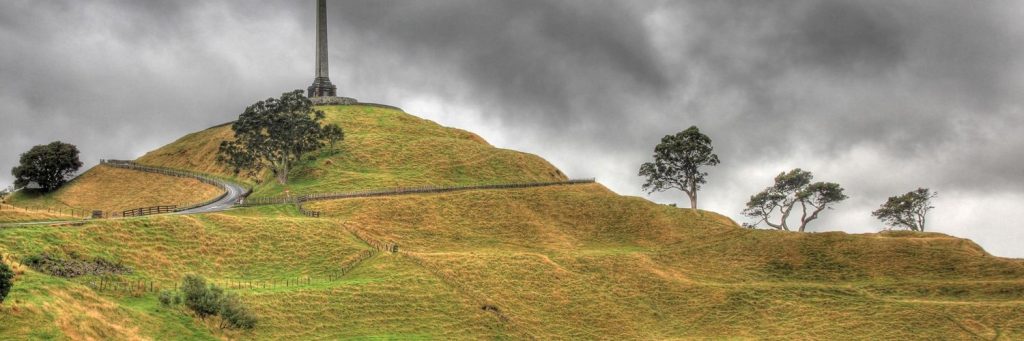
Brian Rudman: May the new plan to save Mt Eden work better than the last
Brian Rudman: Twenty years after a management plan was launched to protect the volcanic cone of Maungawhau-Mt Eden, Auckland City councillors are patting themselves on the back for endorsing a draft plan to protect the area.
We can only hope that version two is taken more seriously than its predecessor ever was.
'The most significant change resulting from the draft management plan is the intention to move towards restricting vehicle access to the summit and encouraging pedestrian access,' says Mayor Dick Hubbard. But not immediately.
Banning vehicles will only be enforced when a 'sustainable, low-impact transport system' is in place to carry the elderly, the disabled and the lazy up and down the mountain. Just what a 'sustainable' transport system might be, I'm not sure. Even walking wears down the soles of your shoes."

 
Field Museum scientists solve riddle of mysterious faces on South Pacific artifacts
CHICAGO—The strange faces drawn on the first pottery made in the South Pacific more than 3,000 years ago have always been a mystery to scientists. Now their riddle may have been solved by new research done by two Field Museum scientists to be published in the February 2007 issue of the Cambridge Archaeological Journal.
What archaeologists working in the Pacific call prehistoric 'Lapita' pottery has been found at more than 180 different places on tropical islands located in a broad arc of the southwestern Pacific from Papua New Guinea to Samoa.
Experts have long viewed the faces sometimes sketched by ancient potters on this pottery ware as almost certainly human in appearance, and they have considered them to be a sign that Pacific Islanders long ago may have worshiped their ancestors. "

 
Ancient group of humans out of Africa, back again: study
After migrating out of Africa, an ancient group of humans circled back through the Levant and moved into northern and eastern Africa, a new research suggests.
An international scientists team reported in the Dec. 15, 2006 issue of the journal Science that this return to Africa occurred 40,000 to 45,000 years ago, around the time that another group left the Levant and peopled Europe.
Modern humans are thought to have dispersed out of Africa along a single southern path, from the horn of Africa across the Red Sea's Bab-el-Mandeb (the Gate of Tears) to the Arabian Gulf and then along the coasts of the Indian Ocean to Southeast Asia and Australasia.
Scientists have divided the worldwide tree of human mitochondrial DNA into branches called 'haplogroups,' which distinguish human populations from different geographic areas.
Curiously, two haplogroups in northern and eastern Africa, known as M1 and U6, are closely related to other haplogroups found predominantly in Asia, according to Anna Olivieri, the lead author of the report.
Olivieri's team sequenced DNA from a wide range of individuals in the M1 and U6 haplogroups and show that populations bearing these markers must indeed have arisen in southwestern Asia and then returned to northern and eastern Africa some 40,000 to 45,000 years ago. "
Comment: "Must indeed?" - Isn't Out of Africa just getting a bit complicated?

Tuesday, December 12, 2006

 
Maori welcome island move
Wellington's Taputeranga Island has been declared wahi tapu (a sacred site) in a move local iwi believe will help preserve its future.
Maori leader Morrie Love said the New Zealand Historic Places Trust's decision was welcomed as the prominent landmark was currently afflicted by weeds and rubbish blown over from the mainland.
Ngati Ira built a pa on the island. But in the 1820s it was taken by Ngati Toa and Ngati Mutunga who invaded from Taranaki. The remains of the pa can still be found. "

 
New Zealand Planning Institute Historic Heritage & the RMA Workshop
Expression of Interest Form - The Ministry for the Environment, the New Zealand Historic Places Trust and the New Zealand Planning Institute® are running a series of workshops nationwide (possibly in February 2007) on Historic Heritage and the RMA.
The purpose of the proposed one-day workshops is to explore the concept of historic heritage and how more effective management can be achieved under the RMA. The outcomes from the workshop will feed into an update of existing Quality Planning guidance.
This workshop series is proposed to be run in February 2007 if there is enough interest. Formal registration forms will be sent out once venues are confirmed.
The workshops will cover the topics such as:
• The nature and scope of historic heritage
• Relevant legislation and agency roles and responsibilities
• The evolving nature of heritage
• Using an assessment tool to evaluate a site / place / landscape
• Developing effective heritage provisions at strategic, regulatory and non-regulatory levels

The workshops will also include local heritage management case studies.
The workshop have been specifically tailored to practitioners with experience in the area of heritage management, for example, in local government, iwi organisations, the Historic Places Trust and the Department of Conservation or as independent contractors (for example; planners, surveyors, archaeologists, historians, conservation architects). The workshops will also appeal to those with an interest in entering the field of heritage management, local government elected members, or those with a general interest. "

Sunday, December 10, 2006

 
Archaeologists unearth local history
FORMER Wanganui mayor Thomas Bamber ate a lot of beef and probably smoked a clay pipe.
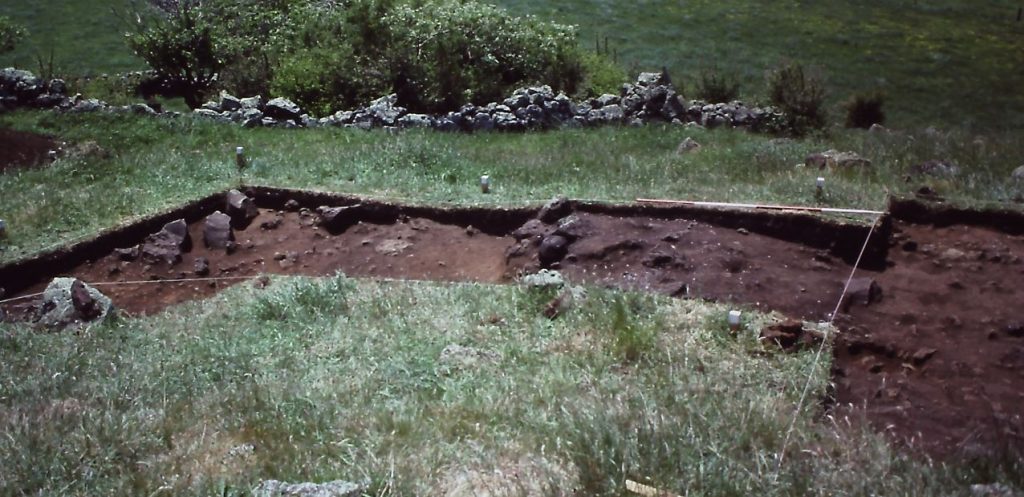
This is becoming clear as a team of archaeologists excavate his former house site in Rutland St, next door to what is now Chronicle Glass. The team of 12, from private Auckland and Hamilton-based company CFG Heritage, have been painstakingly digging at the site since the middle of last week.
Their job is to find and record every trace of the past still captured in the ground under Whanganui Ucol’s future building site They will be finished by Christmas, archaeologist Mat Campbell said, and any remaining traces will be destroyed during the building process. "

Friday, December 08, 2006

 
Papers by Terry Hunt and others; Department of Anthropology, University of Hawai'i
Full texts:

2006 'Ancient DNA of the Pacific rat (Rattus exulans) from Rapa Nui (Easter Island)' (S.S. Barnes, E. Matisoo-Smith, T.L. Hunt) Journal of Archaeological Science 33:1536-1540.

2006 'Rethinking the Fall of Easter Island: New evidence points to an alternative explanation for a civilization's collapse.' American Scientist 94:412-419.

2006 'Late Colonization of Easter Island' (T.L. Hunt and C.P. Lipo) Science DOI: 10.1126/science.1121879. Published online 9 March 2006.

2005 'Mapping prehistoric statue roads on Easter Island' (C.P. Lipo and T.L. Hunt) Antiquity 79:158-168."

 
Archaeologist digs into region’s ancient history
Landowners and residents in South Wairarapa are being warned not to worry about a stranger hanging about at the end of their gardens or back paddocks.
Over the next fortnight New Zealand Archaeological Association archaeologist James Robinson will be inspecting 140 archaeological sites in and around the district – of the up to 500 known sites in Wairarapa – as part of an Upgrade Project for the national database of sites. "

 
Auckland Museum Institute
Vaka Moana Programme

"DNA across the Pacific waves
Wednesday 31 January 7.30pm

Lecture Series CCE - Vaka Moana: Voyages of the Ancestors
Bookings Essential In conjunction with Auckland Museum, The Centre for Continuing Education, brings you three lectures in support of the exhibition Vaka Moana:

Wednesday Wednesday 7 February 7.30pm
The Last and Greatest Migration: The Human Discovery and Settlement of the Pacific
Prof Kerry Howe

Wednesday Wednesday 14 February 7.30pm
Lifestyles of the Lapita People from Vanuatu
Dr Hallie Buckley, Otago University

Wednesday Wednesday 21 February 7.30pm
Voices of the Islands: Linguistics and the Austronesian Migrations
Dr Ross Clark Phd Head of Linguistic Study, University Auckland

 
Vaka Moana - Public Programmes
Auckland Museum:
Includes:

Matahi Brightwell Tohunga Tarai Waka
Lecture
Wednesday 13 December
4pm
$10 and $5 members
Matahi Brightwell is a Tohunga Tarai Waka and taught at Takapuwahia marae in Toa Rangatira Wananga (1973-1981). He is currently working on the Hawaiki Nui 2 project in Moorea, French Polynesia. This double-hulled canoe will be sailing to Peru to re-enact one of the many great voyages of the ancestors. Matahi has been instrumental in the revival of traditional methods in building, navigating and sailing and is well regarded for his facilitation of waka ama wananga throughout the Pacific.

The Way to Tahiti — Ke Ala i Kahiki
Ben Finney Nautical Anthropologist
Lecture
Thursday 14 December 7pm
$10 and $5 members
Nautical anthropologist Ben Finney tells of his experiences in building vaka moana (voyaging canoes) and sailing them over ancient sea routes, and in nurturing and chronicling the voyaging renaissance that has followed.
Professor Emeritus Ben Finney has been teaching at the University of Hawai’i since 1970, and has also taught at the University of French Polynesia, Australian National University, International Space University and the University of California at Santa Barbara. He obtained a M.A. in anthropology at the University of Hawai’i (1959) and a Ph.D. in anthropology at Harvard University (1964).


Film Screening and Talk by Hekenukumai Busby
Kupe: Voyaging by the Stars (1993) 50min
Friday 15 December 7.30pm
Saturday 16 December 3pm
APEC Room
$10 and $5 members. $6 entry to exhibition. Bookings essential. Phone 09 306 7048
An opportunity to meet Hector Busby and view the exhibition prior to the documentary screening.
In collaboration with NZ Film Archive, Auckland Museum is proud to screen ‘Kupe: Voyaging by the Stars’. Hekenukumai Busby rediscovers ancient star navigation traditions during a 1,800 mile ocean voyage in his traditional

 
Historical Archaeology Code of Practice 2006
Contribution from the Heritage Council of NSW.

Wednesday, December 06, 2006

 
Newsletter / AINZ back issues for sale
Steve Wood - SteveW@stjohns-hamilton.school.nz has a large number of back issues available - from 1961 on - odd issues for some years - 31 full years. Email him for more information.

Tuesday, December 05, 2006

 
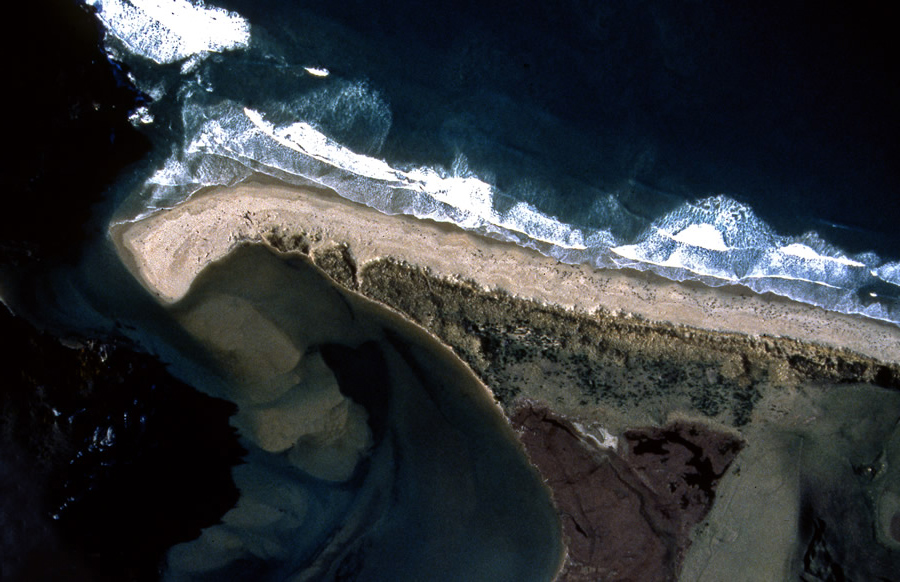
So many reasons to save sandspit - Whangarei
The spinmeisters of Landco let slip their plans for the Ngunguru Sandspit a little earlier than they intended to yesterday when their latest newsletter was briefly posted on their website.
It revealed that - right in line with the Northern Advocate's earlier reports - a residential development of 350 buildings is proposed for the southern end of the sandspit.
The information, complete with diagrams of the planned subdivision, was quickly taken down - but opponents of the development will no doubt be flocking to view exactly what they're up against in a public display at the Ngunguru Memorial Hall from tomorrow at 10am.
We can expect the reaction to be fierce.
And rightly so. Ngunguru Sandspit ticks all the boxes for an environment worthy of preservation: It is ecologically unique and is home to threatened native species; the Department of Conservation recognises it as an important biological and cultural area; it contains wahi tapu sites - Maori burial grounds and a sacred mountain - recognised by the New Zealand Historic Places Trust; in council land-management speak, it is defined as a 'visual amenity' and an 'outstanding natural feature'; it is a coastal and flood hazard zone; it acts as a safety barrier for Ngunguru from extreme weather conditions, and has been breached by storms within recent history. "

 
Wombats bigger than cars killed off by climate change
Giant kangaroos and wombats bigger than cars which once roamed Australia were killed by climate change and not human hunters, Australian scientists said yesterday.
The report comes as the country struggles with what could be its worst drought in 1,000 years, affecting more than half its farmlands.
Known as megafauna, the huge animals were driven into extinction by a steady warming of Australia's climate, which in turn saw a once-lush outback region turn to red desert and grasslands.
'For about the last half-million years it's been consistently getting drier in Australia,' Dr Gregory Webb told Reuters after studying fossil-rich areas of south-east Queensland state."

Saturday, December 02, 2006

 
Following the stars into the unknown
Auckland Museum hopes New Zealanders will do a bit of 'way-finding' to discover a ground-breaking exhibition about the Polynesian migration across the Pacific Ocean.
The ancestors of today's Pacific peoples travelled the vast oceans 4000 years ago by a method of navigation traditionally known as way-finding, based on observations of the sea and sky.
The migration story is central to the Vaka Moana exhibition in the new exhibition space, part of the Dome museum extension."

Friday, December 01, 2006

 
Archaeology and Technology on the Otago Gold Fields
A website based on research in Otago while an exchange student. The technology referred to is GIS / GPS not mining technology. Dont miss the links under "sites" they are not intuitive but worth the effort.


This page is powered by Blogger, the easy way to update your web site.


Become a Member of the N.Z. Archaeological Association

Members get our quarterly magazine, Archaeology in New Zealand and discounts on publications and events.


Northland Site Recording Scheme Chatham Islands Alternative Archaeology Wellington Conferences Southland Professional Resources Other Links Archaeology in New Zealand www.nzarchaeology.org Search Sites to Visit NZJA OPACS RMA and Archaeology Canterbury Professional Development Officers of the Association Google Earth - NZ sites Consulting Archaeologists Auckland Site Recording Scheme NZ Links Professional Resources Teacher Resources Annual Reports Site Map Joining Otago Careers in Archaeology eNews archaeopedia.com Lapita Quiz wasserdichte fahrradtaschen Officers of the Association Archsite E-Groups Careers in Archaeology Link to Us Employment Professional Development Teacher Resources Constitution Join NZAA Archaeologists Email Google Earth - NZ sites Bay of Plenty Digs RSS Coromandel Archaeopedia Awards

This message is intended to be compliant with New Zealand Law: The Unsolicited Electronic Messages Act 2007. Please communicate with the webmaster on any issues that may arise in this regard.

Tell a friend about this newsletter:

Opinions in items linked in this column are not those of the Association.

An archive of news posts can be accessed at http://www.nzarchaeology.org/blog/archive/


Good advice for environmental problems   rmaguide.org.nz


(You will get a confirmation email you need to respond to)

.

.

.

.

.

.

.

.